Pappardelle: The Wide Ribbon That Demands a Serious Ragu
// Introduction
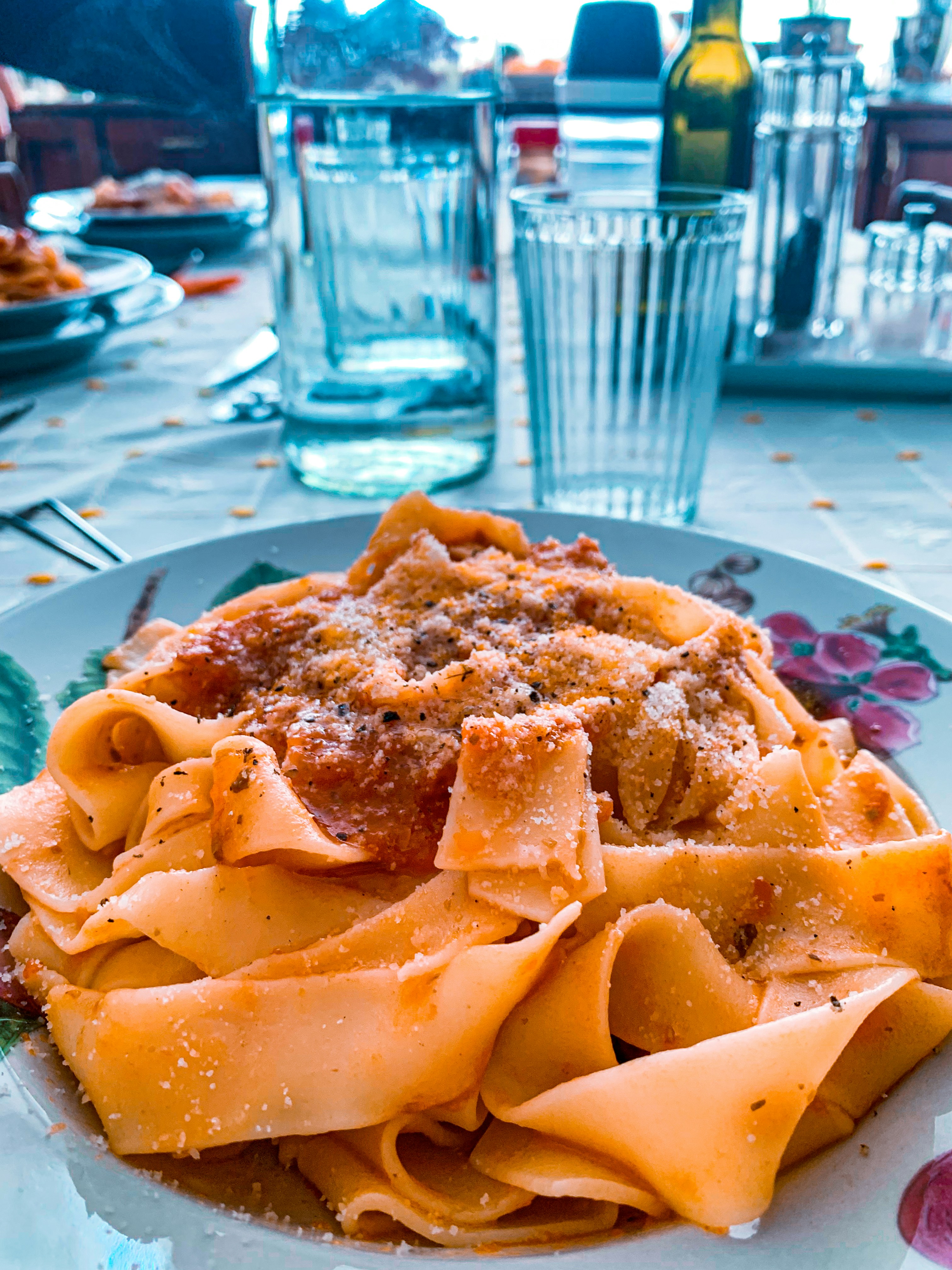
Pappardelle is the largest pasta ribbon in the Italian canon. Each strand is 2 to 3cm wide, long, flat, and slightly irregular at the edges. It is a pasta that makes no attempt at subtlety. It is wide because it needs to be wide. It is designed to carry slow-cooked ragu, the kind that takes four hours and fills the kitchen with the smell of braised meat and red wine.
The Name and the Origin
Pappardelle comes from the Tuscan verb "pappare," meaning to gobble up or eat greedily, and the name tells you everything about the spirit of the dish. This is not a pasta for delicate eating. It is a pasta for serious appetite.
Pappardelle is Tuscan in origin, from the same region that produces the wild boar ragu it is most famously paired with. The width of the pasta was designed to match the weight and texture of the sauce: a chunky, slow-cooked meat ragu needs a wide surface to rest on. A thin pasta would be overwhelmed. Pappardelle holds its own.
Why Width Matters
The width of pappardelle is not arbitrary. It is a response to the sauces it is paired with. Wide, flat pasta has a large surface area that can support chunky, textured sauces without the sauce falling off or the pasta disappearing into it.
A narrow pasta like spaghetti or linguine cannot carry a chunky ragu. The sauce falls between the strands. The pasta and sauce remain separate. Pappardelle provides a platform: the wide, flat surface holds the sauce in place, and each forkful delivers pasta and sauce in the right proportion.
The slight irregularity of handmade or bronze-die pappardelle also helps. The uneven surface creates texture that grips sauce more effectively than a perfectly smooth, uniform ribbon.
The Classic Pairings
Wild boar ragu (cinghiale): The Tuscan classic. Wild boar braised for hours with red wine, tomato, rosemary, and juniper berries. The sauce is rich, dark, and intensely flavoured. Pappardelle is the only pasta wide enough to carry it properly.
Slow-cooked beef ragu: A simpler version of the same principle. Beef braised with red wine and aromatics until it falls apart, then shredded into the sauce. The pappardelle holds the shredded meat in place. Every forkful has everything.
Mushroom ragu: For a vegetarian option, a slow-cooked mushroom ragu with porcini, thyme, and a little cream is one of the great autumn pasta dishes. The earthiness of the mushrooms matches the wheaty flavour of good bronze-die pappardelle. The width of the pasta holds the chunky mushroom pieces.
Truffle and butter: The simplest preparation. Good butter, shaved truffle, and Parmigiano Reggiano. The wide surface of the pappardelle carries the butter sauce evenly. The truffle perfumes every bite. It is expensive and completely worth it.
Cooking Pappardelle
Pappardelle is a delicate pasta despite its size. It cooks quickly, typically 3 to 4 minutes for dried pappardelle, and it goes from al dente to soft very fast. Watch it carefully.
Use a large pot with plenty of salted water. The wide ribbons need room to move freely or they will stick together. Stir immediately after adding to the water and again after one minute.
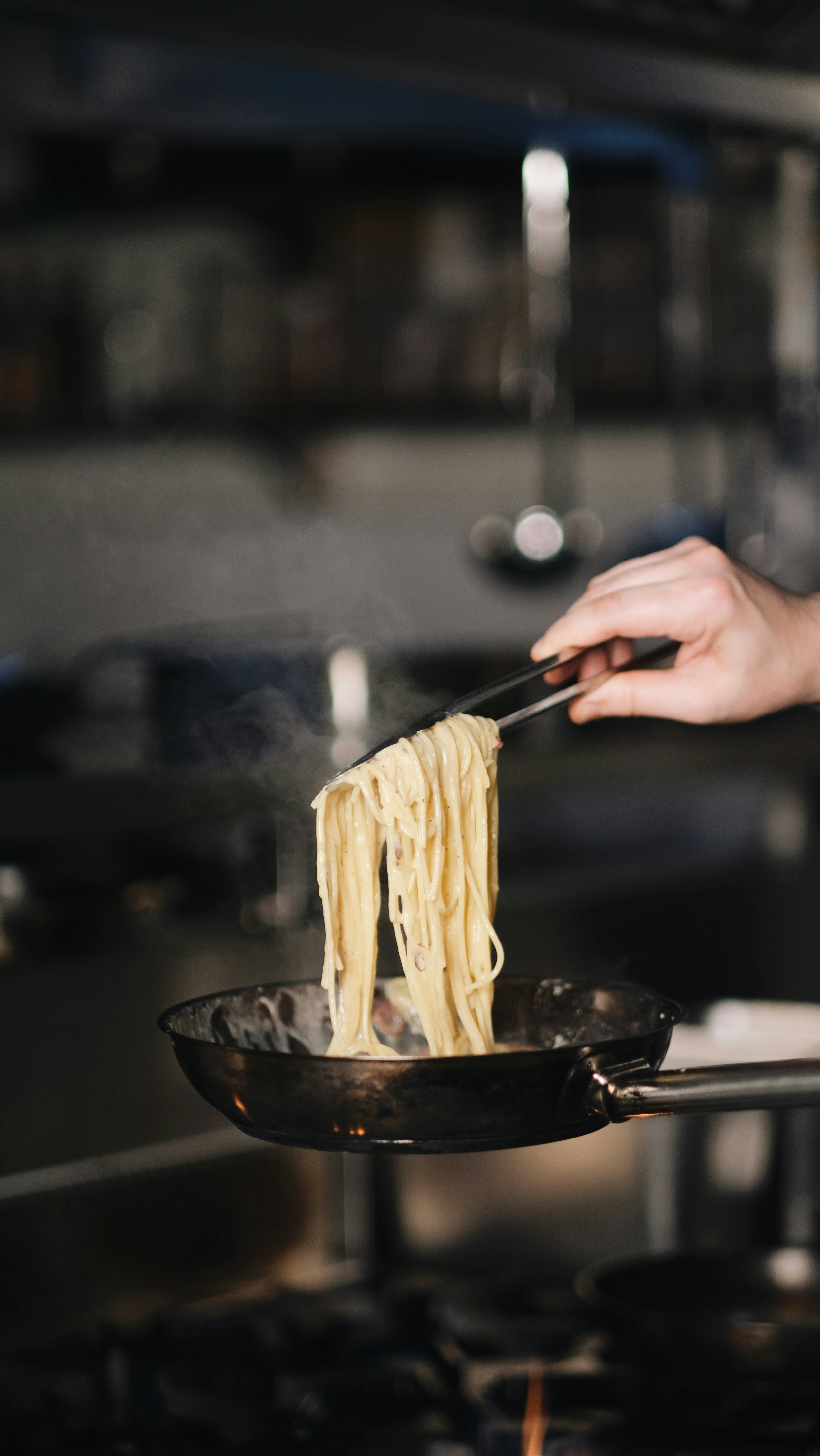
Drain carefully. Pappardelle tears more easily than shorter pasta shapes. Use tongs rather than a colander if possible, lifting the pasta directly into the pan with your sauce. The pasta water clinging to the ribbons will help emulsify the sauce.
Finish in the pan over medium heat, tossing gently. Pappardelle does not need aggressive tossing. It needs gentle folding to coat the ribbons without breaking them.
Bronze Die Pappardelle
The surface of pappardelle matters as much as the surface of any other pasta shape. Smooth, Teflon-die pappardelle is slippery: the sauce slides off the wide, flat surface rather than clinging to it. Bronze-die pappardelle has a rough, porous surface that holds sauce in place.
For a dish as simple as pappardelle al ragu, where the pasta and sauce are the entire dish, the quality of the pasta is everything. Bronze-die, slow-dried pappardelle has a pronounced wheaty flavour that complements the richness of a slow-cooked ragu. It is not a neutral vehicle. It is a flavour in its own right.
Wide ribbons for serious sauces.
Bronze-die pappardelle from Calabria. Slow-dried and ready for the ragu it deserves.
// More from the Journal